Jamaican Colors Meaning: What Black, Green and Gold Stand For

Jamaica's flag has three colors: green, gold and black. It has no red, white or blue in it, which makes it the only national flag in the world that can say that.
People often mix these colors up with the red, gold and green of Rasta. The two sets share some colors, but they aren't the same set and they don't mean the same things. This guide covers what each color on the flag stands for, where the flag came from, and how it differs from the Rasta colors.

What the Jamaican Flag Looks Like
A gold diagonal cross runs from corner to corner and splits the flag into four triangles. The triangles at the top and bottom are green. The ones on the pole side and the outer side are black. The flag is twice as long as it is tall. It's sometimes called "The Cross" or "Black, Green, and Gold."
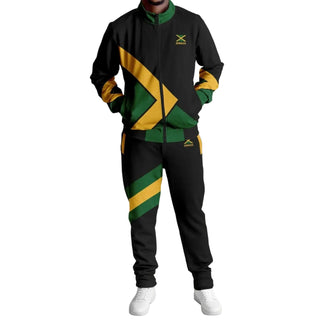
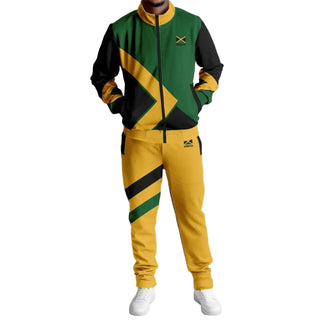
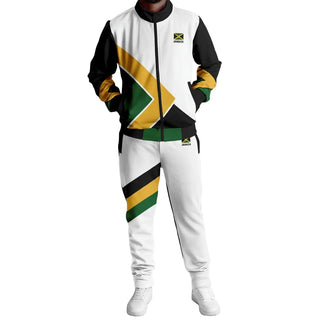
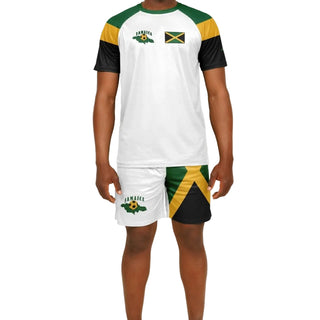
The colors show up well beyond the flag itself. You'll see them at Independence Day events and on plenty of clothing in the national colors. For a lot of Jamaicans, and for people in the diaspora, wearing them is a quiet way to say where you come from.
What Each Color Stands For
The Jamaica Information Service, the government's own information agency, sums up the flag in one line: "The sun shineth, the land is green and the people are strong and creative." Each color matches one part of it.
Black
Black stands for the strength and creativity of the Jamaican people.
Gold
Gold stands for the natural beauty of the sunlight and the wealth of the country.
Green
Green stands for hope, and for the island's agricultural resources. Sugar cane, bananas and coffee are all grown there.
Where the Flag Came From
The flag was first raised at midnight on August 5, 1962, as the British flag came down. That marked the end of more than 300 years of British rule. Jamaica's Independence Day is August 6, and that is the date the flag was formally adopted.
Getting to the final design took some work. A national design contest ran in 1961 and drew hundreds of entries, but it didn't produce a winner. Several of those entries are kept at the National Library of Jamaica. Early in 1962, a committee with members from both political parties in the House of Representatives designed the flag instead. Its first version had horizontal stripes, but that looked too much like the flag of Tanganyika, which is now part of Tanzania. So the committee switched to the diagonal cross.
How the Meaning of Black Changed
An earlier official explanation of the colors came in a government paper in May 1962. It read: "Hardships there are but the land is green and the sun shineth." In that version, black stood for hardships.
In 1996 the meaning of black was changed to the strength and creativity of the people, who have come through those hardships. The colors themselves stayed exactly the same.
 Jamaica HoodiesIsland-pride fleece layersShop now →
 Jamaica TracksuitsMatching two-piece Jamaica setsShop now →
 Jamaica ShoesGreen gold and black sneakersShop now →
How These Colors Differ From Rasta Colors
Rastafari began in Jamaica in the 1930s, and its followers look to Ethiopia and to Emperor Haile Selassie I. They regularly use the three colors of the Ethiopian flag, red, gold and green, and many add black for the skin of African people. One account says the gold was also borrowed from Jamaica's flag.
That means the two sets share gold and green, and the flag has black where Rasta has red. The meanings are different too. The flag's colors talk about the sun, the land and the people of Jamaica. The Rasta colors are tied to Africa and to faith.
There's a third set that gets mixed in: red, black and green. The Jamaican activist Marcus Garvey designed that flag for the Universal Negro Improvement Association, which formally adopted it in August 1920. It's known as the Pan-African flag. Garvey said red stood for the blood of martyrs, black for the skin of Africans, and green for the vegetation of the land.
You'll also hear the Rasta set called "reggae colors," because reggae music uses a lot of Rastafari symbolism and the two are widely linked. Here's a quick rule of thumb. If red is in the mix, it's Rasta or Pan-African. Green, gold and black with no red is the Jamaican flag.
Where You'll See the Colors
Independence Day on August 6 is the big one. Around it, Jamaica's culture minister has encouraged people to wear the national colors with pride and to decorate their homes and buildings in celebration of the nation's heritage. The theme of the 2025 celebrations was "Be Proud, Be Bold in Black, Green and Gold." The flag may also be flown on private buildings on national occasions, and it flies at polling stations on Election Day.
If you want the wider picture of the island, from the music to the food and the language, our guide to Jamaican culture and island pride covers it.
How to Treat the Flag and Its Colors
Jamaica has an official code for using the flag. It says the flag should never touch the ground, and that nothing should ever be written or drawn on it. It should be flown at half-mast when the Prime Minister's office declares official mourning. A worn or torn flag should be retired with respect, preferably by burning it in private.
You don't need all three colors at full strength. Black works as an easy base, with gold or green showing up in one or two places.
Frequently Asked Questions
What do the colors of the Jamaican flag mean?
Black stands for the strength and creativity of the people. Gold stands for the natural beauty of the sunlight and the wealth of the country. Green stands for hope and the island's agricultural resources.
Did the meaning of black change?
Yes. In 1962, black stood for hardships. Since 1996, it has stood for the strength and creativity of the people. The colors never changed.
Are the Jamaican flag colors the same as Rasta colors?
No. The flag is green, gold and black. The Rasta colors are red, gold and green, and many people add black. They share gold and green, but they mean different things.
When was the Jamaican flag first raised?
At midnight on August 5, 1962, as the British flag was lowered. It was formally adopted on August 6, 1962, Jamaica's Independence Day.
Who designed the Jamaican flag?
A committee with members from both political parties in the House of Representatives designed it in early 1962. A national design contest in 1961 had not produced a winner.